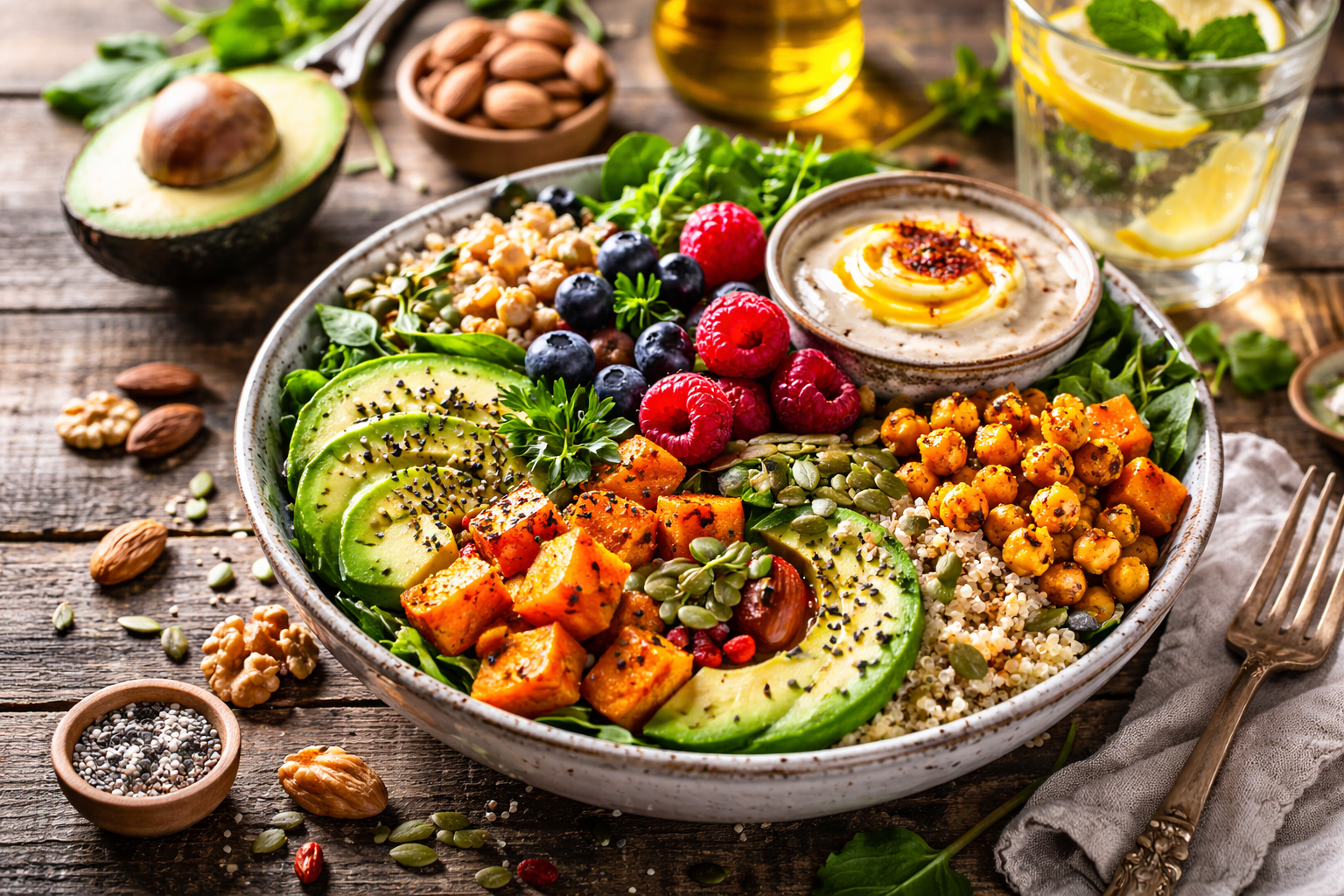
How Plant-Based Meal Planning Can Support an Active Lifestyle
How Plant-Based Meal Planning Can Support an Active Lifestyle
Plant-based meal planning designed to fuel movement, support recovery, and sustain energy for active living.

Why Plant-Based Nutrition Works for Active People
An active lifestyle places higher demands on the body—for energy, recovery, hydration, and nutrient balance. Plant-based meal planning supports these needs by emphasizing whole foods that provide steady fuel, antioxidants, and diverse micronutrients.
When meals are planned intentionally, plant-based eating becomes a powerful tool for performance rather than a limitation. Plant-based meal planning helps active individuals train, recover, and stay energized without relying on ultra-processed foods or excessive supplementation.
Key benefits of plant-based meal planning for active people include:
- Sustained energy: Whole grains, legumes, and fruits provide slow-releasing carbohydrates
- Muscle recovery: Beans, lentils, tofu, and tempeh supply plant proteins for repair
- Reduced inflammation: Fruits, vegetables, nuts, and seeds help manage exercise stress
- Micronutrient support: Iron, zinc, magnesium, and B vitamins aid energy metabolism
- Hydration & electrolytes: Plant foods contribute potassium, magnesium, and fluid


Core Principles of Plant-Based Meal Planning for Activity
Effective plant-based meal planning for an active lifestyle focuses on balance, variety, and timing.
- Protein variety: Combine legumes, grains, nuts, and seeds to meet amino acid needs
- Complex carbohydrates: Brown rice, oats, quinoa, and sweet potatoes for endurance
- Healthy fats: Avocado, olive oil, walnuts, and flaxseed for recovery and hormone health
- Iron & B12 awareness: Use fortified foods or supplements as needed
- Meal timing: Carbohydrates before activity, protein after for optimal performance
Plant-based meal planning works best when meals are spaced consistently across the day to support training and recovery cycles.
Sample Weekly Plant-Based Meal Plan (Active Lifestyle)
Day 1
Breakfast – Overnight oats with chia, flaxseed, and blueberries
Lunch – Lentil & quinoa salad with spinach
Dinner -Tofu stir-fry with broccoli & brown rice
Snack – Apple + almond butter
Performance Focus – Steady energy + protein –
Day 2
Breakfast – Smoothie (banana, kale, soy milk, hemp seeds)
Lunch -Chickpea wrap with hummus & cucumber
Dinner -Black bean chili with sweet potato
Snack – Trail mix (nuts + dried fruit)
Performance Focus – Recovery + iron
Day 3
Breakfast – Whole-grain toast with avocado & pumpkin seeds
Lunch -Mediterranean bowl (falafel, tabbouleh, roasted veggies)
Dinner -Tempeh curry with cauliflower rice
Snack – Edamame
Performance Focus – Protein + antioxidants
Day 4
Breakfast – Fortified cereal with oat milk & strawberries
Lunch -Quinoa & bean burrito bowl
Dinner -Grilled eggplant with lentils & barley
Snack – Orange + walnuts
Performance Focus – Glycogen replenishment
Day 5
Breakfast – Tofu scramble with peppers & mushrooms
Lunch -Lentil soup with whole-grain bread
Dinner -Chickpea stew with spinach & couscous
Snack – Banana + sunflower seeds
Performance Focus – Muscle repair
Day 6
Breakfast – Rice porridge with sesame seeds & papaya
Lunch -Buddha bowl (brown rice, beans, avocado, roasted carrots)
Dinner -Vegan stir-fry with tofu & bok choy
Snack – Kiwi + cashews
Performance Focus – Electrolytes + satiety
Day 7
Breakfast – Smoothie bowl (mango, flaxseed, granola)
Lunch -Black bean & corn salad
Dinner -Grilled portobello mushrooms with quinoa
Snack – Stewed prunes
Performance Focus – Antioxidants + recovery
How Weekly Structure Supports Performance
Plant-based meal planning is most effective when meals are planned weekly rather than spontaneously. Weekly structure:
- Ensures adequate calorie and protein intake
- Reduces reliance on convenience foods
- Supports consistent hydration and snack timing
- Makes pre- and post-workout nutrition intentional
With plant-based meal planning, active individuals can focus on movement instead of constantly wondering what to eat next.
Practical Tips for Plant-Based Meal Planning
To make plant-based meal planning sustainable for an active lifestyle:
- Batch cook legumes and grains once or twice a week
- Rotate protein sources to avoid nutrient gaps
- Keep portable snacks ready for training days
- Use fruits and vegetables as natural electrolyte sources
- Adjust portions based on training intensity
Plant-based meal planning should feel supportive, not restrictive.
Disclaimer
This content is for educational purposes only and does not provide medical or clinical advice. Individuals with specific health conditions or high-performance training demands should consult a qualified healthcare professional or registered dietitian for personalized guidance.
to receive weekly meal inspirations, kitchen hacks, and buying guides for healthy living
Practical Takeaway
Plant-based meal planning for an active lifestyle is about fueling workouts with complex carbohydrates, supporting recovery with diverse plant proteins, and protecting long-term health through antioxidants and healthy fats. With thoughtful weekly structure, plant-based meal planning helps active individuals sustain energy, recover efficiently, and thrive in both training and daily life.