Healthy Food Preparation Surfaces Buying Guide for Weekly Meal Planning
Healthy Food Preparation Surfaces Buying Guide for Weekly Meal Planning
A practical food preparation surfaces buying guide to help you choose hygienic, durable, and easy-to-maintain work surfaces for healthier cooking and efficient weekly meal planning.
Healthy Food Preparation Surfaces Buying Guide for Weekly Meal Planning
Every meal begins with preparation. Before ingredients are cooked, they are washed, trimmed, sliced, diced, and organized on a work surface. Choosing the right food preparation surfaces plays an important role in food safety, kitchen organization, and the overall efficiency of meal preparation.
Many home cooks focus on cookware and appliances while overlooking the preparation surfaces they use every day. However, cutting boards and food prep surfaces directly affect hygiene, knife performance, cleaning routines, and the risk of cross-contamination.
This food preparation surfaces buying guide explains the most common preparation surface materials, compares their strengths and limitations, and helps you choose the right surface for healthier weekly meal planning.
How Food Preparation Surfaces Support Weekly Meal Planning
Preparing meals in advance often means handling multiple ingredients during a single cooking session. Vegetables, fruits, raw meats, herbs, seafood, and cooked foods all require clean, organized work areas.
Choosing appropriate food preparation surfaces helps maintain food safety while improving kitchen workflow.
Well-designed preparation surfaces allow you to:
Separate raw and cooked foods.
Protect knife edges during cutting.
Simplify cleanup after meal prep.
Reduce cross-contamination.
Organize ingredients more efficiently.
For households preparing meals every week, investing in quality preparation surfaces contributes to a safer and more enjoyable cooking experience.
Types of Food Preparation Surfaces
Wood Cutting Boards
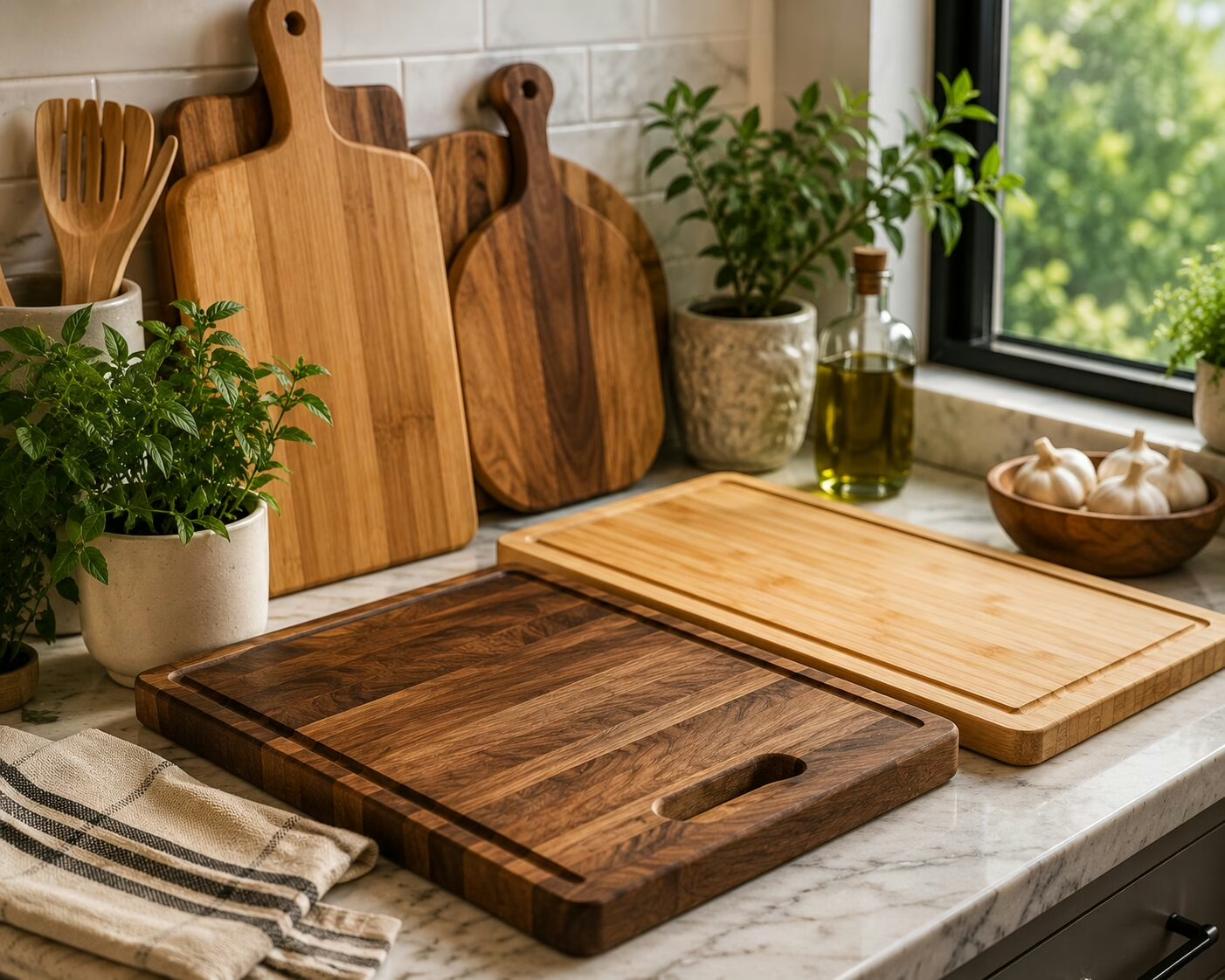
Wood remains one of the most popular food preparation surfaces because of its durability and natural appearance. Hardwood boards such as maple, walnut, and cherry provide excellent cutting performance while helping protect knife edges.
Best For
Vegetables
Herbs
Bread
Fruits
Everyday meal preparation
Advantages
Gentle on knives
Durable with proper care
Attractive appearance
Long lifespan
Considerations
Requires regular oiling and should not remain wet for extended periods.
Bamboo Cutting Boards
Bamboo offers a lightweight and renewable alternative to traditional hardwood boards. It resists moisture well while providing a smooth cutting surface suitable for everyday food preparation.
Best For
Fruits
Vegetables
Everyday slicing
General kitchen use
Advantages
Renewable material
Lightweight
Moisture resistant
Easy to clean
Considerations
May be slightly harder on knife edges than hardwood.
Plastic Cutting Boards
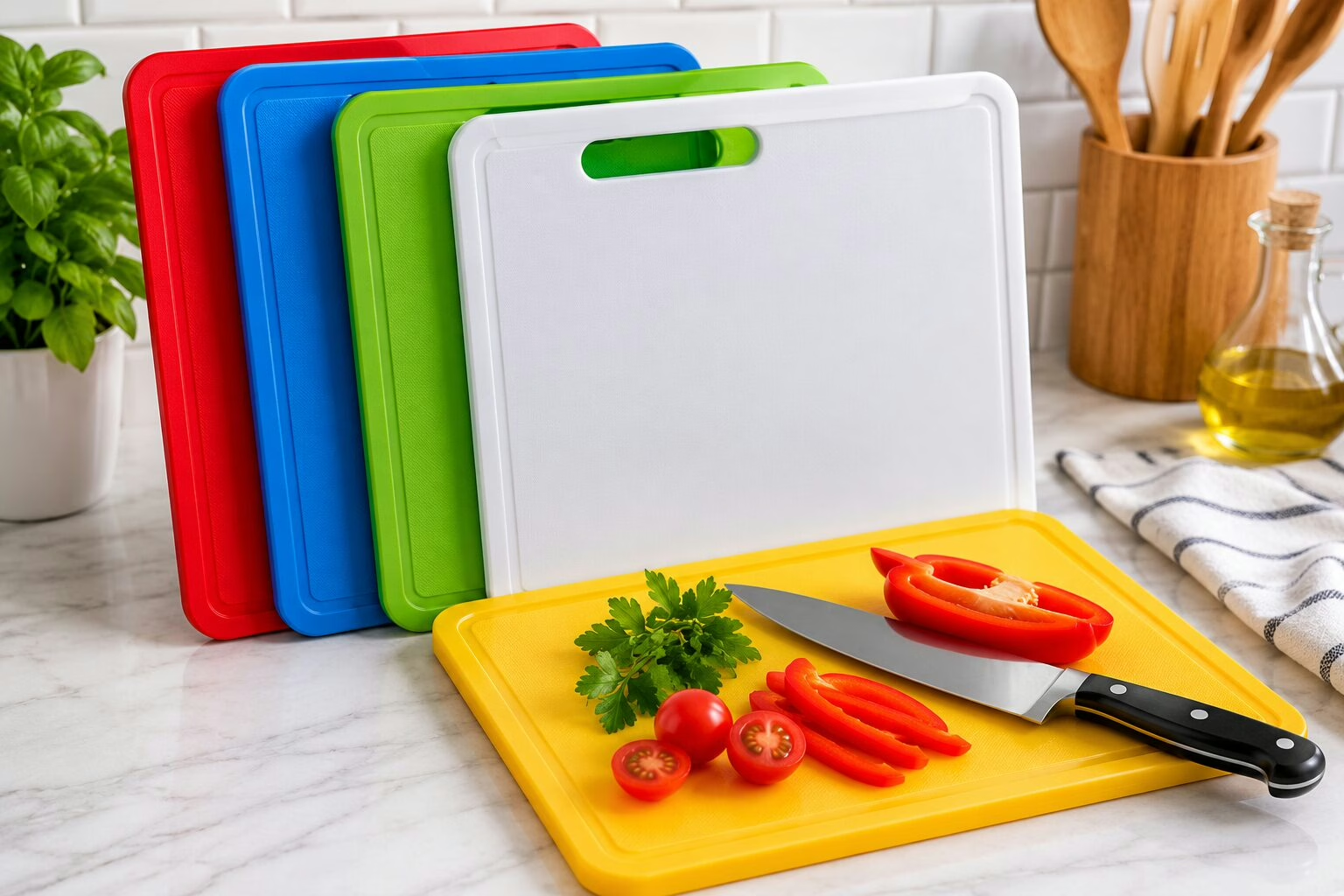
Plastic boards are commonly used because they are lightweight, affordable, and easy to sanitize. Many households use color-coded boards to separate raw meat, poultry, seafood, vegetables, and ready-to-eat foods.
Best For
Raw meat
Poultry
Seafood
Food safety organization
Advantages
Dishwasher safe
Affordable
Easy to sanitize
Color-coded options available
Considerations
Deep knife grooves may develop over time and should be monitored for wear.
Composite Cutting Boards
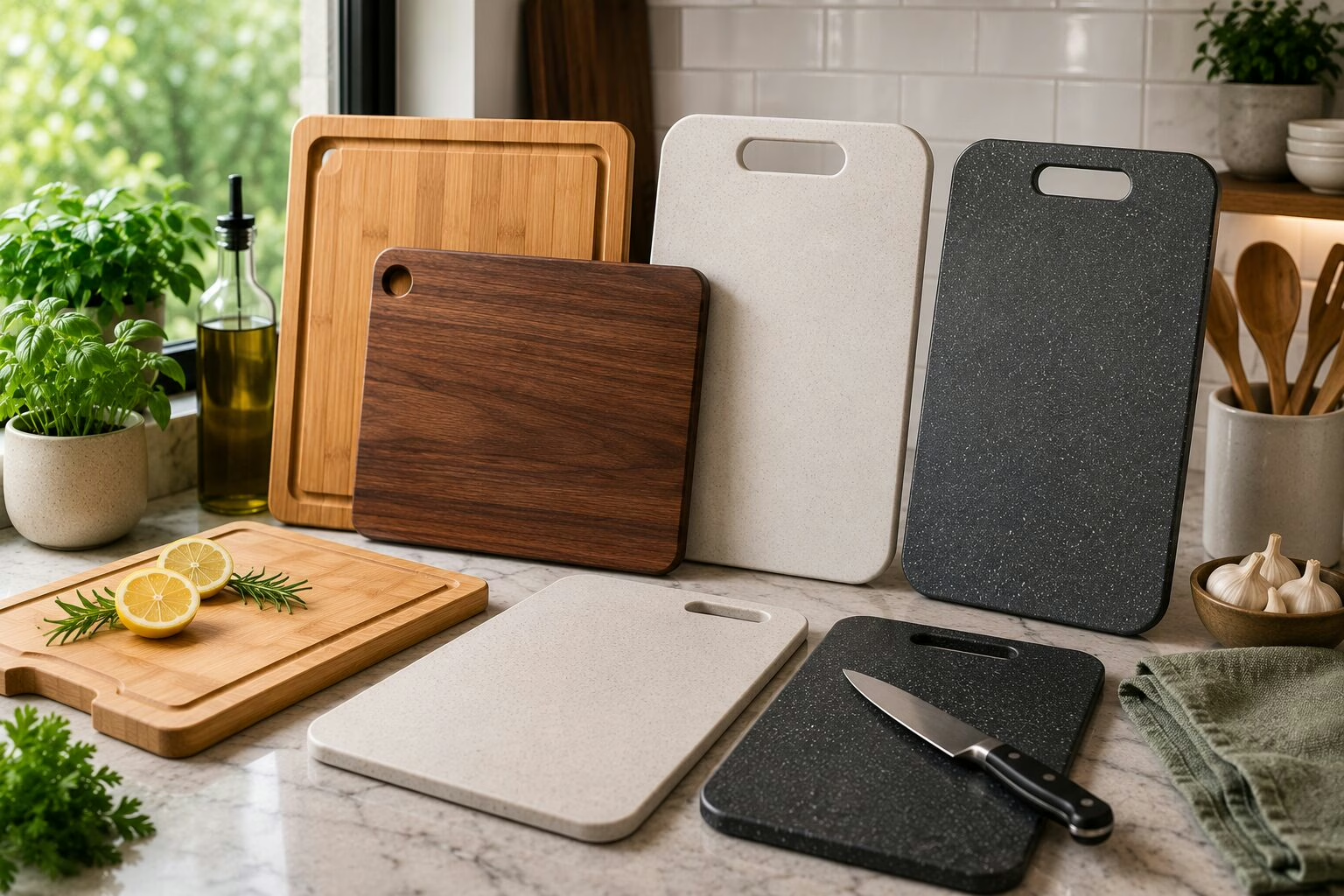
Composite boards combine wood fibers and food-safe resins to create durable food preparation surfaces that resist moisture while remaining relatively gentle on knives.
Best For
Everyday cooking
Meal prep
Multi-purpose kitchens
Advantages
Durable
Moisture resistant
Low maintenance
Stable cutting surface
Considerations
Generally more expensive than plastic cutting boards.
Stainless Steel Preparation Surfaces
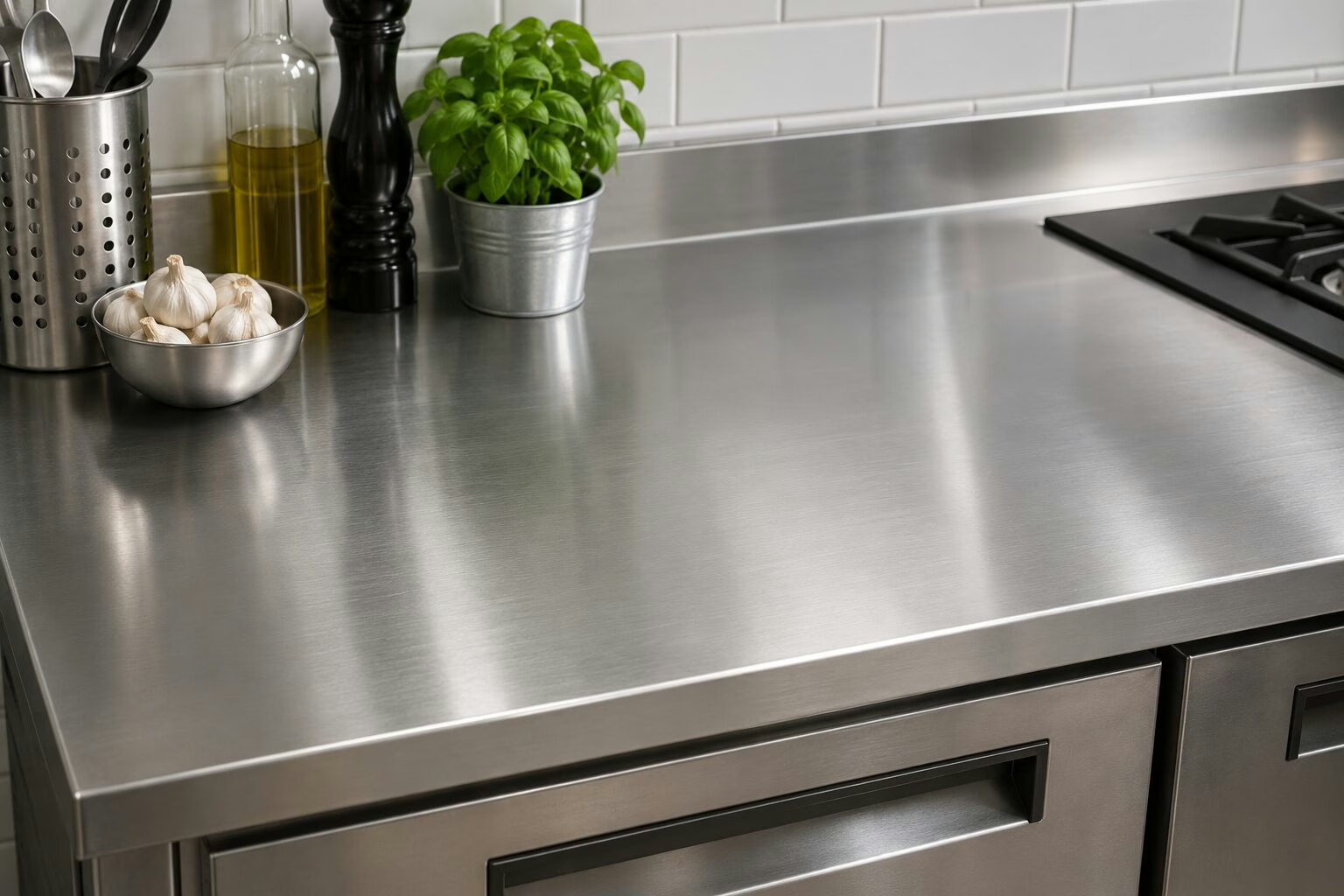
Stainless steel is widely used in commercial kitchens because it is durable, non-porous, and easy to sanitize. Although it is less commonly used as a cutting surface, it serves as an excellent food preparation workstation.
Best For
Dough preparation
Baking
Commercial kitchens
Ingredient organization
Advantages
Highly hygienic
Non-porous
Heat resistant
Easy to sanitize
Considerations
Not recommended as the primary cutting surface because it can dull knife edges.
Hygiene and Food Safety
Maintaining clean food preparation surfaces is just as important as choosing the right material.
Good food safety practices include:
Washing boards immediately after use.
Using separate boards for raw meats and fresh produce.
Replacing heavily damaged plastic boards.
Oiling wooden boards regularly.
Sanitizing surfaces after preparing raw proteins.
Consistent cleaning helps reduce the risk of cross-contamination while supporting healthier meal preparation.
How to Choose the Right Food Preparation Surface
hen selecting food preparation surfaces, consider:
The types of food you prepare most often.
How frequently you cook.
Your preferred maintenance routine.
Knife protection.
Available storage space.
Budget.
Whether multiple cutting boards are needed for food safety.
Many home cooks benefit from using more than one preparation surface—for example, a wooden board for vegetables and bread alongside a plastic board reserved for raw proteins.
Frequently Asked Questions
Wood cutting boards are generally considered the most knife-friendly because they help preserve sharp edges.
Yes. Properly cleaned bamboo boards provide a hygienic preparation surface suitable for everyday cooking.
Plastic cutting boards are easy to sanitize and are often dishwasher safe, making them practical for handling raw proteins.
Yes. Using multiple food preparation surfaces helps reduce cross-contamination and improves kitchen organization.
Final Thoughts
Choosing the right food preparation surfaces is an important step toward creating a healthier and more organized kitchen. Whether you prefer the natural durability of wood, the sustainability of bamboo, the convenience of plastic, the resilience of composite materials, or the hygiene of stainless steel workstations, each option offers unique advantages for different cooking styles.
By selecting preparation surfaces that match your meal planning routine, maintaining proper cleaning practices, and using separate boards for different food types, you can improve food safety, protect your kitchen tools, and make weekly meal preparation more efficient.