Slow Cooker Buying Guide for Weekly Meal Planning
Slow Cooker Buying Guide for Weekly Meal Planning
A practical slow cooker buying guide for real kitchens, real schedules, and repeatable weekly meals.
Slow Cooker Buying Guide for Weekly Meal Planning
Understanding Slow Cooker Product Specifications
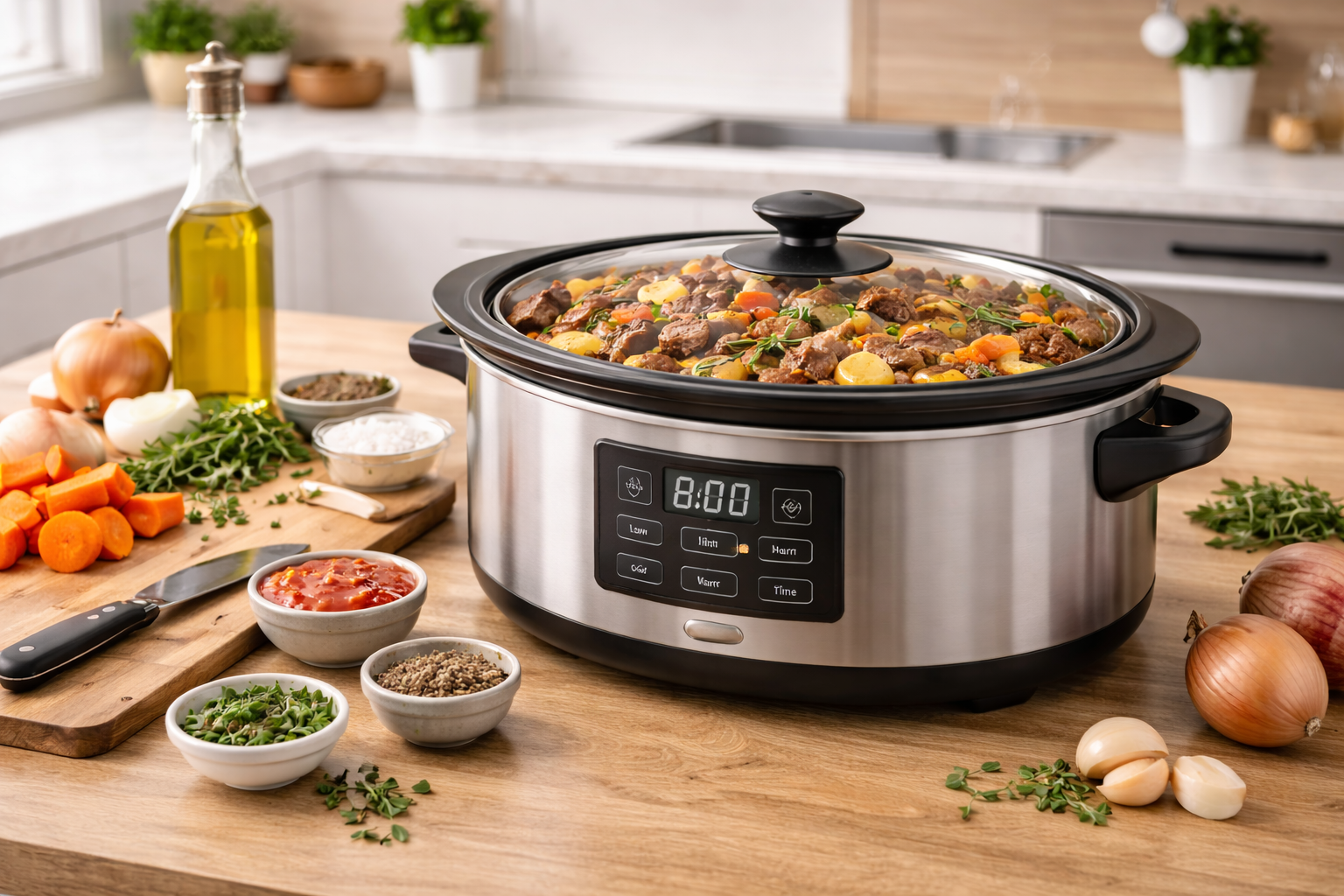
- Capacity (Quarts): Capacity determines whether you can cook once and eat multiple times. Smaller models suit individuals or couples, while larger sizes are better for families and batch cooking.
- Heat Settings: Low, High, and Warm settings provide flexibility for different schedules and recipes.
- Programmable Controls: Timers and automatic switch-to-warm features help prevent overcooking when meals finish before you’re ready to eat.
- Inner Pot Material: Stoneware inserts retain heat well and are ideal for slow, even cooking. Removable inserts also make cleanup easier.
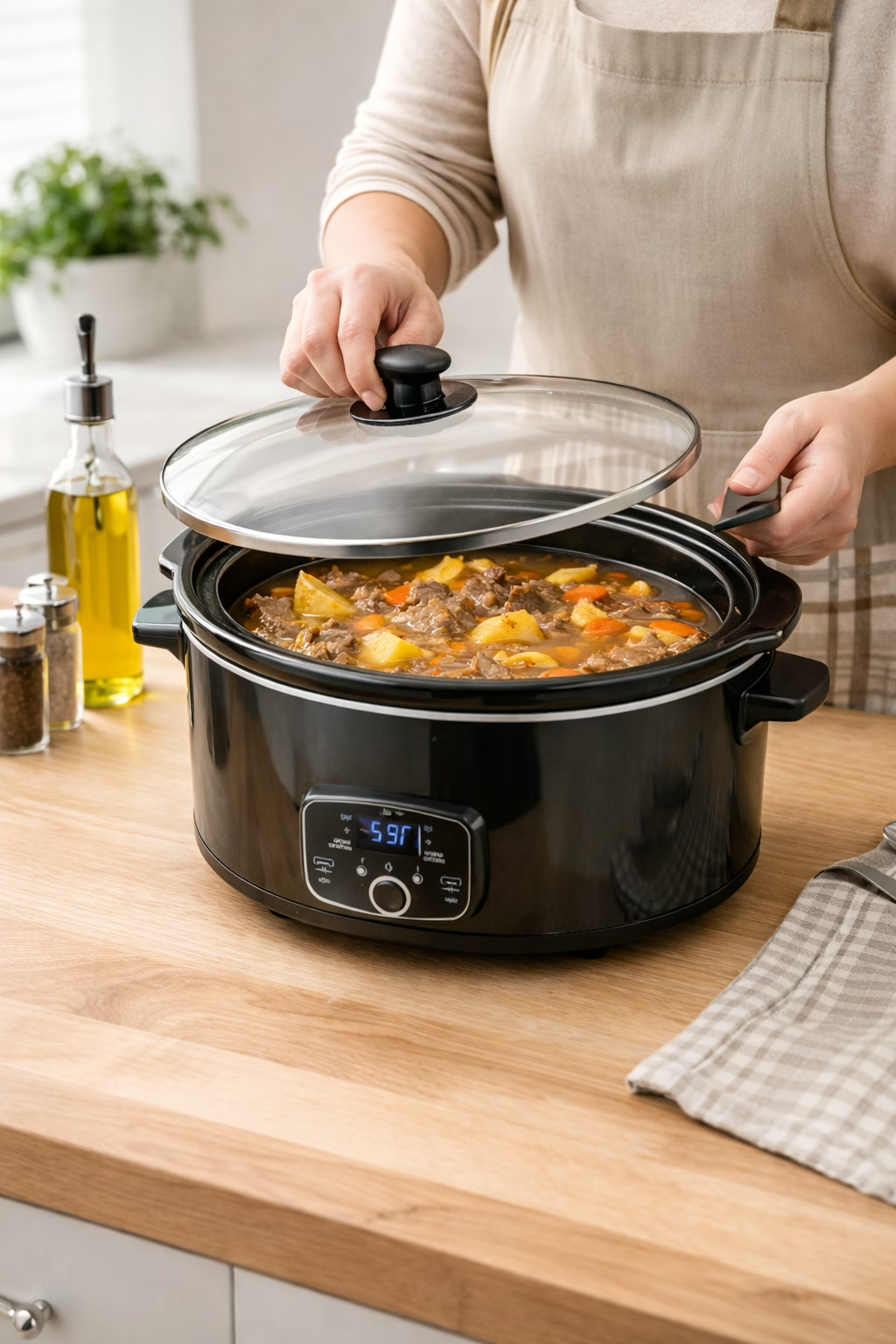
- Lid Design: Secure or locking lids are helpful for transport, while glass lids allow quick visual checks without releasing heat.
- Footprint: Counter and storage space matter for an appliance intended for regular weekly use.
How to Choose a Slow Cooker That Fits Your Weekly Routine
Why Slow Cookers Support Consistent Weekly Meal Planning
Features That Matter Most for Weekly Use
Use Hands-off cooking during busy days
Large-batch preparation for leftovers
Even heat for repeatable results
Warm settings that protect food quality
Frequently Asked Questions
Yes. Slow cookers are designed for large portions and are well-suited for preparing meals that last several days.
With regular cleaning and proper use, most slow cookers last many years under weekly use.
They support whole-food cooking, portion control, and low-fat preparation methods when paired with balanced ingredients.
With regular cleaning and proper use, most slow cookers last many years under weekly use.
Reviews
“Set It, Forget It, and Come Home to Real Food”
Weekdays used to feel so overwhelming, especially after work. Now I just set everything in the slow cooker and come home to a ready meal. I’ve been using more leftovers and freezer meals too, and I don’t rely on takeout as much anymore. It just makes life feel a lot more manageable.
– Kathleen, 37
Final Note