Healthy Kitchen Environment Buying Guide for Healthy Homes
Healthy Kitchen Environment Buying Guide for Healthy Homes
A practical healthy kitchen environment buying guide to help you improve air quality, manage moisture, reduce odors, and create a cleaner, healthier space for everyday cooking and weekly meal planning
Healthy Kitchen Environment Buying Guide for Healthy Homes
A healthy kitchen is about more than quality cookware and fresh ingredients. The environment where meals are prepared also affects comfort, cleanliness, and overall well-being. Steam from boiling water, grease released during cooking, lingering odors, and excess humidity can all influence the quality of the air inside your home.
Creating a healthy kitchen environment involves making thoughtful improvements that support cleaner air, better moisture control, and a more pleasant cooking space. Many of these upgrades are simple to implement and can make everyday cooking more comfortable while supporting long-term weekly meal planning.
This healthy kitchen environment buying guide explores practical upgrades that improve indoor air quality, reduce excess moisture, minimize odors, and create a cleaner kitchen for healthier home cooking.
Why a Healthy Kitchen Environment Matters
A well-maintained healthy kitchen environment supports both food preparation and everyday comfort.
Good kitchen conditions help:
Improve indoor air quality.
Reduce lingering cooking odors.
Control excess humidity.
Help prevent mold and mildew caused by moisture.
Create a more comfortable space for meal preparation.
Support better food storage conditions.
These improvements become especially valuable for households preparing meals several times each week.
Small Upgrades That Improve a Healthy Kitchen Environment
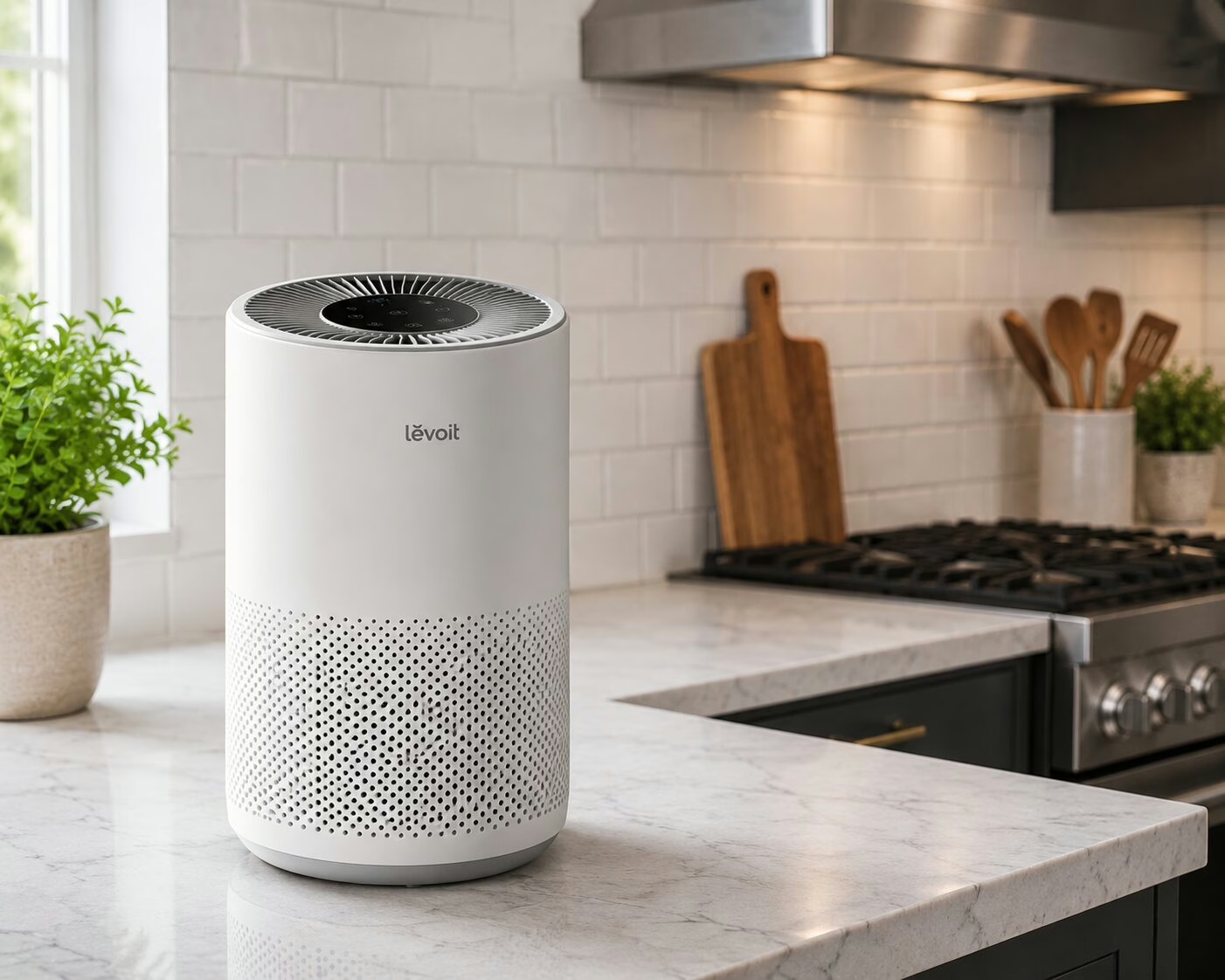
Kitchen Air Purifiers
Air purifiers designed for home use help capture airborne particles such as dust, pollen, smoke, and some cooking odors. Models equipped with HEPA filters are commonly used to improve indoor air quality in kitchens and nearby living spaces.
Best For
Open-concept homes
Frequent cooking
Allergy-conscious households
Reducing cooking odors
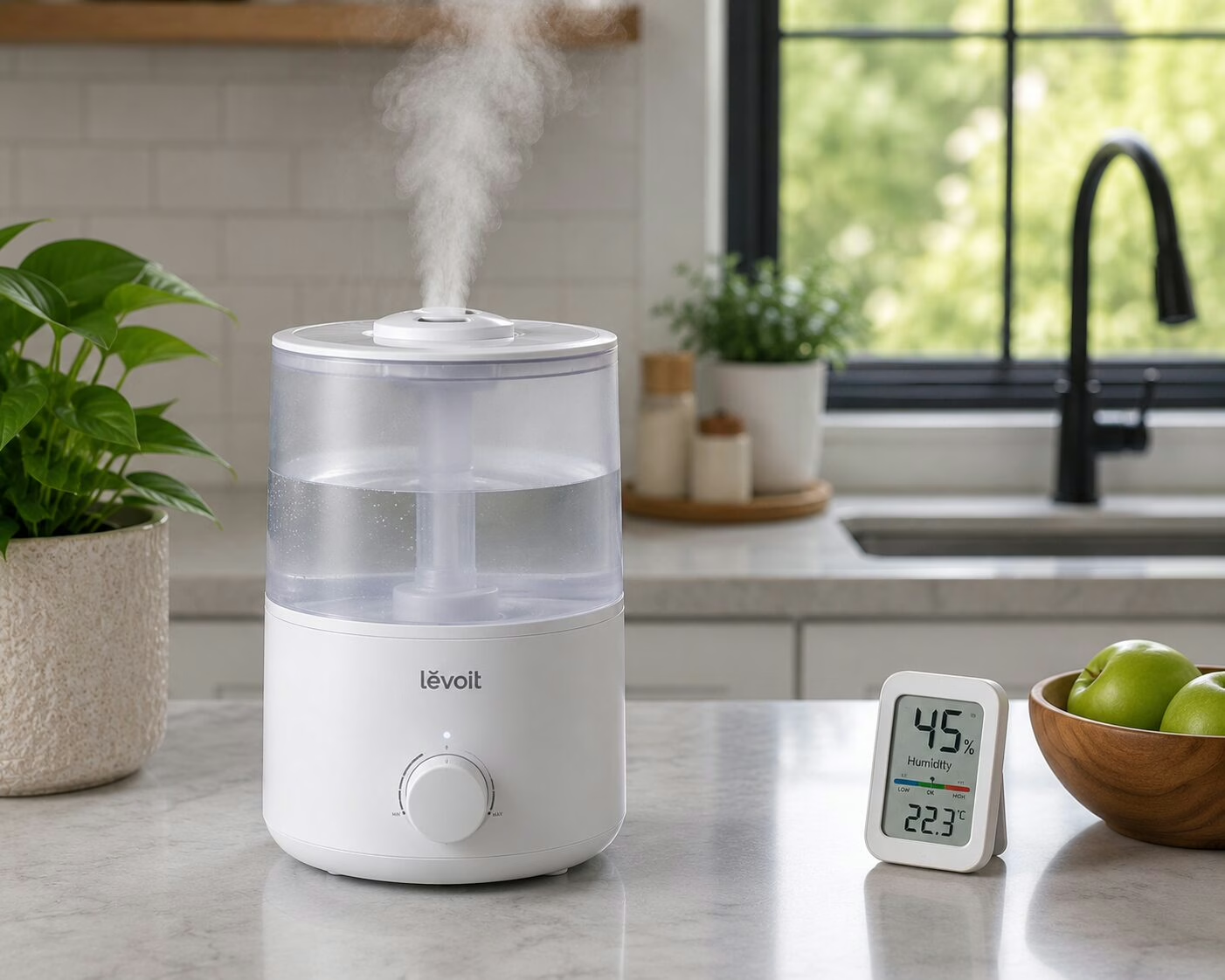
Humidity Control
Steam generated during cooking can increase indoor humidity. Monitoring and controlling humidity helps reduce condensation on windows, cabinets, and walls while discouraging mold growth.
Helpful solutions include:
Hygrometers
Dehumidifiers
Improved ventilation
Opening windows when weather permits
Maintaining balanced humidity contributes to a healthier kitchen environment.
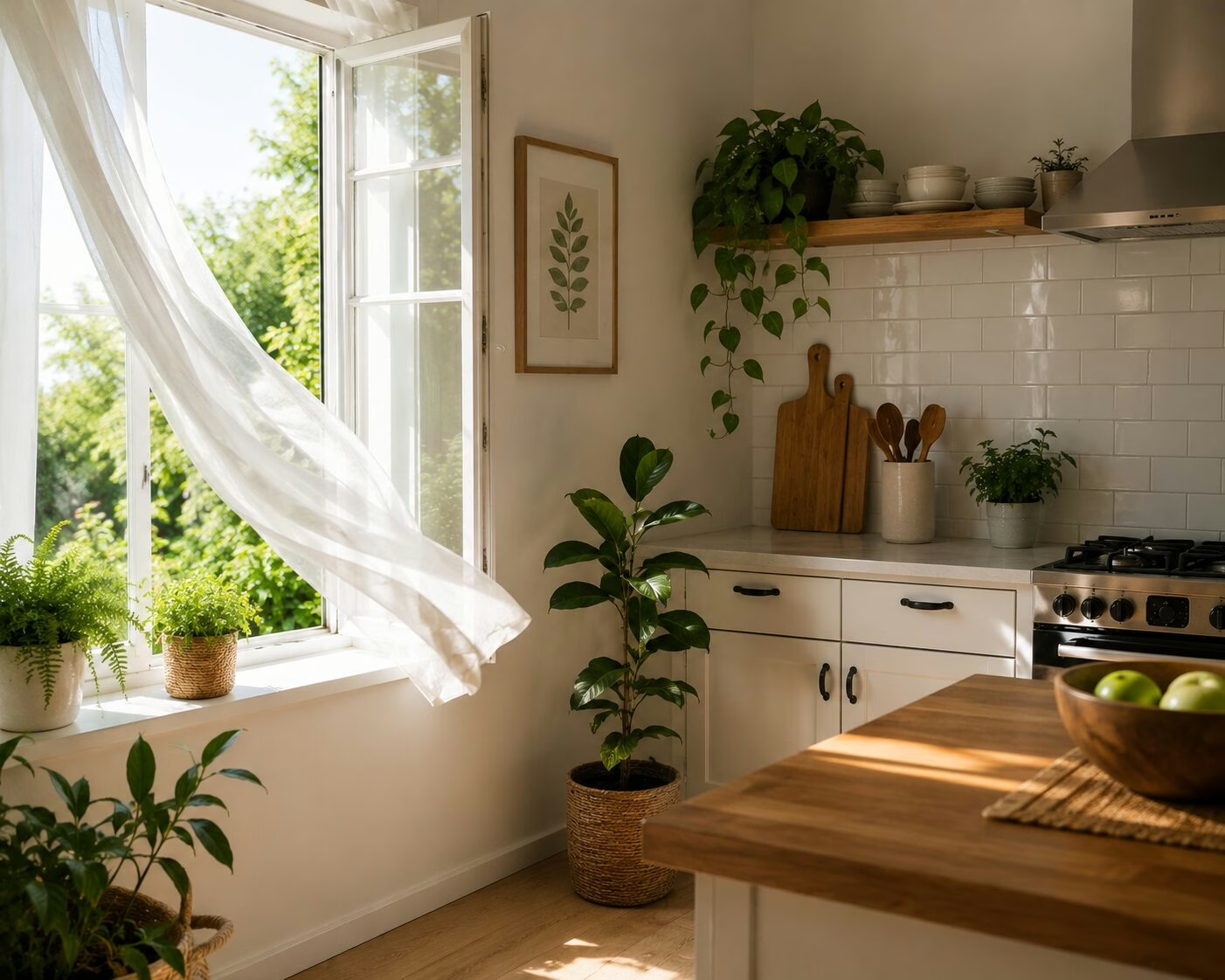
Natural Air Circulation
Simple airflow improvements often make a noticeable difference.
Natural ventilation may include:
Opening windows
Cross ventilation
Ceiling fans
Exhaust fans
Better airflow helps remove moisture and refresh indoor air after cooking.
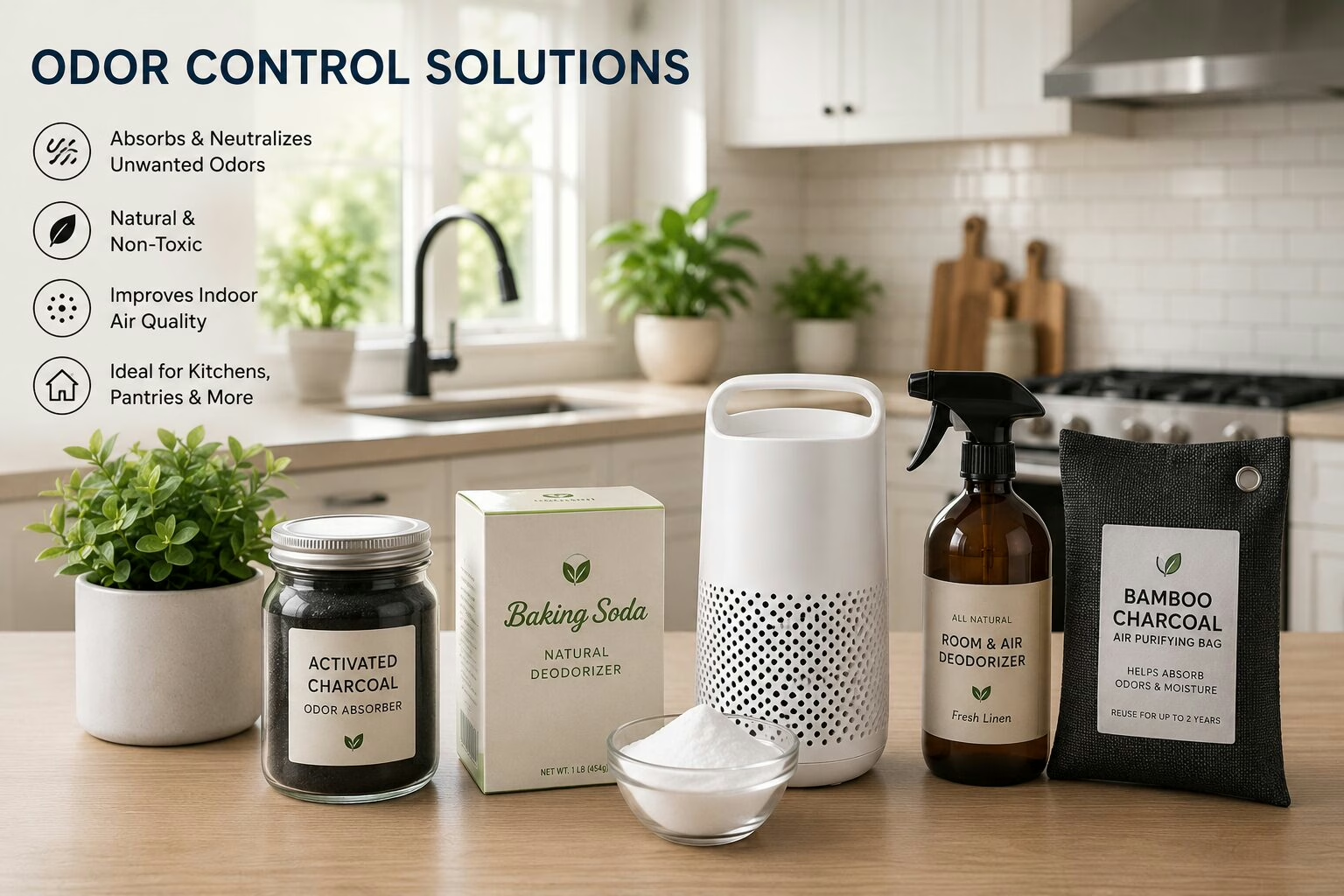
Odor Control Solutions
Cooking aromas can linger long after meals are finished. Odor control products help keep kitchens fresh without overpowering fragrances.
Popular options include:
Activated charcoal odor absorbers
Baking soda odor absorbers
Refrigerator deodorizers
Natural ventilation
These solutions work well alongside proper kitchen ventilation.
Indoor Plants for Kitchen Spaces
Many homeowners enjoy adding indoor plants to create a fresher and more inviting cooking environment. Plants also introduce natural greenery that complements healthy kitchen design.
Popular kitchen-friendly plants include:
Spider plants
Herbs
Snake plants
Pothos
Choose locations that receive appropriate light while keeping plants away from food preparation areas.
Water Quality Monitoring
Clean water contributes significantly to a healthy kitchen environment. Combining a quality water filtration system with routine maintenance ensures reliable water for drinking, cooking, and washing fresh produce.
Regularly replacing water filters helps maintain consistent performance and water quality.
Organized Cleaning Stations
A dedicated cleaning area makes it easier to maintain a healthy kitchen environment.
Consider organizing:
Food-safe cleaning products
Microfiber cloths
Reusable cleaning brushes
Dishwashing supplies
Sanitizing sprays
Keeping cleaning supplies accessible encourages regular maintenance without cluttering countertops.
Choosing the Right Upgrades
Not every household requires the same improvements.
When selecting products for a healthy kitchen environment, consider:
Kitchen size.
Frequency of cooking.
Household humidity levels.
Existing ventilation.
Indoor air quality concerns.
Available storage space.
Maintenance requirements.
Budget.
Starting with one or two upgrades often provides noticeable improvements without requiring major renovations.
Benefits of a Healthier Kitchen Environment
Creating a healthy kitchen environment provides several long-term advantages.
These include:
Improved indoor air quality.
More comfortable cooking conditions.
Better moisture management.
Reduced cooking odors.
Cleaner kitchen surfaces.
Enhanced food preparation experience.
Greater enjoyment during meal planning.
Together, these improvements support healthier cooking habits throughout the year.
Frequently Asked Questions
A kitchen air purifier can help improve indoor air quality, particularly in homes where cooking occurs frequently or where ventilation is limited.
Many homes aim to maintain indoor humidity between approximately 30% and 50%, although ideal levels vary depending on climate and household conditions.
Indoor plants contribute to a pleasant kitchen atmosphere and can complement a clean, organized cooking space when properly maintained.
Ventilation is one of the most effective improvements, but combining good airflow with humidity control, filtration, and regular cleaning creates a more complete healthy kitchen environment .
Final Thoughts
Creating a healthy kitchen environment does not require extensive remodeling. Small improvements such as better ventilation, humidity management, cleaner air, organized cleaning supplies, and reliable water filtration can significantly enhance the comfort and functionality of your kitchen.
By selecting upgrades that match your cooking habits and maintaining them regularly, you can create a healthier space that supports safe food preparation, enjoyable cooking, and consistent weekly meal planning for years to come.